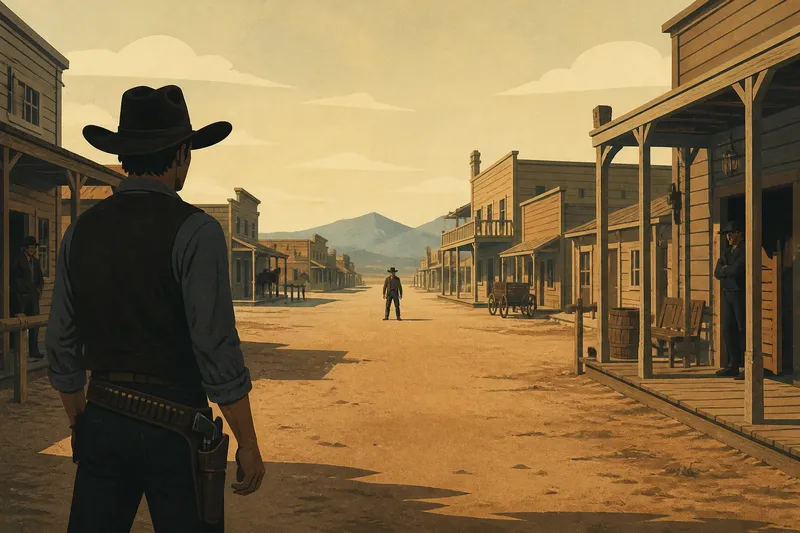
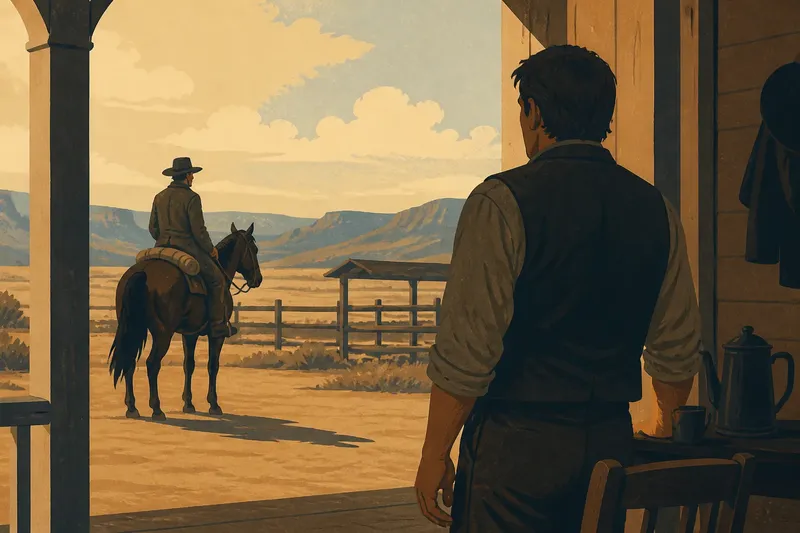
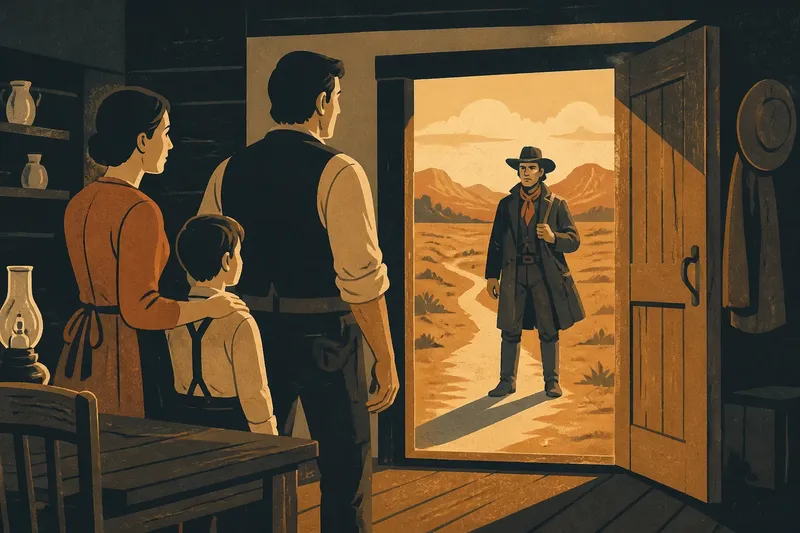
How Western Sound Mixes Put the Landscape in Motion
A Western landscape sound rewatch shows how wind, hoofbeats, and silence shape a scene’s geography, helping you hear movement and distance beyond the frame.
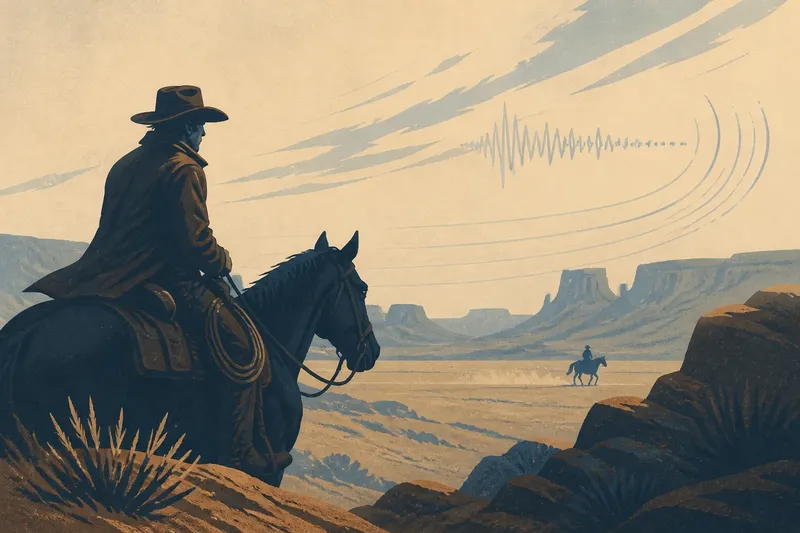
A Western landscape sound rewatch can reveal geography the camera leaves uncertain. When a rider crosses a ridge, a hoofbeat arriving before the horse appears gives the terrain a path and a depth; the sound mix can make the country feel active rather than merely scenic.
Listen for how a scene arranges sounds around cuts, bodies, and empty space. The question is not whether the wind or horse sounds realistic, but how the film uses them to guide attention and make the landscape change as action unfolds.
How does a sound mix map a landscape?
A sound mix maps space by placing some details near and others far away. Tack creaking beside a rider can feel close, while a bird call beyond the visible ridge suggests distance the image cannot confirm.
Notice what happens when the camera cuts. If wind or insects continue across the edit, the setting seems to extend beyond either shot. If a sound stops with the image, the cut may feel more enclosed, as though the new view has opened onto a separate pocket of space.
Keep three observations in mind:
- Near and far: If a sound is crisp and prominent, then note it as close; if it is faint or softened, then consider whether the mix places it farther away.
- Direction: If the sound seems to come from one side, then track whether the camera or a character turns toward it; otherwise, note that its source remains unlocated.
- Continuity: If the sound carries across a cut, then read the landscape as continuing beyond the frame; if it ends at the edit, consider whether the scene is narrowing attention.
These are descriptions of the finished scene, not claims about how its sounds were recorded. Wind, a designed effect, and music can overlap; what matters is the spatial impression the mix creates.
What can wind do beyond signaling weather?
Wind can connect a character to a larger environment without showing that environment in full. A broad rush may sit behind the whole scene, while a gust through brush or around rock gives the air a more particular direction.
Listen for changes in intensity and texture. If the wind swells as a coat or hat brim moves, then the sound joins the body to the weather; if it remains steady through a tense exchange, then the landscape may feel indifferent to the characters’ concerns.
A wind bed can also make a cut feel continuous. When it persists from a wide view to a closer shot, the character seems to remain inside the same exposed country. When it falls away, the edit may bring the listener into a more private or isolated moment.
How do hoofbeats shape our sense of movement?
Hoofbeats make movement audible before the camera necessarily clarifies it. A rhythm that grows louder can suggest approach, while one that fades can leave a rider moving away into the unseen country.
The mix may combine hoof impacts with breath, leather, or shifting tack. If those close details remain clear beneath a wide image, then the horse feels physically present despite its small size on screen; if the impacts soften into the background, the rider may seem absorbed by distance.
Pay attention to the relationship between rhythm and editing, too. A cut that arrives with a change in the beat can make movement feel interrupted or redirected. A steady rhythm across the cut, by contrast, may bind separate views into one journey.
Why can silence change the scale of a shot?
Silence can make a figure seem exposed because it removes the background sounds that would otherwise give the land familiar boundaries. A small scrape or breath then becomes prominent, as if the listener has been brought close to the character while the surrounding country recedes.
Film silence is rarely absolute. Listen for faint hiss, clothing, or a single animal call. If one small detail remains audible, then the quiet has focused attention on it; if even those traces are withheld, then the scene may make the landscape feel unusually unmeasured.
The effect can shift between shots. A close view with little background sound may detach a character from the land, while a wide view under the same restraint can make the visible distance feel difficult to judge. Quiet does not automatically mean calm.
How can you tell environmental sound from the score?
Environmental sound often has a physical relation to the scene: grass moves with a gust, a horse steps, or a bird calls from offscreen. Music more often organizes mood through melody, rhythm, or sustained tones, though a film can blend the two until their source is uncertain.
Rather than forcing a label, ask what the sound follows. If it changes with visible movement, then it may be tied to the action; if it holds across several images and shapes their emotional tone, then it may function more like score. Either way, note the effect on your sense of space.
Imagine a rider stopping at the edge of a dry plain. You begin with a low rush beneath the dialogue and tack shifting during the pauses; then, on a later listen, you notice that the rush continues across the cut to the rider’s face while the tack remains close. The resulting distinction is clear: the wind holds the wider place together, while the tack keeps the horse beside the rider.
What listening questions help make sense of the scene?
Should you use headphones for a Western landscape sound rewatch?
Headphones can make faint calls and left-to-right movement easier to notice. Speakers may give the mix a less enclosed feel, so choose the setup that lets you hear comfortably without straining.
Should you turn off the music?
Keep the soundtrack intact on the first pass, since the relation between score and environmental sound is part of the scene’s design. An alternate mix can offer a comparison, but it is a different listening context rather than a definitive version.
What if the scene has almost no environmental sound?
Notice what the quiet does to the image and to small details such as breath or a footstep. If one sound stands out, then consider how the mix has focused attention; if nothing does, then ask whether the landscape feels detached or deliberately withheld.
How often should you replay a scene?
Replay only when you have a fresh comparison in mind, such as approach versus retreat or sound continuing versus stopping at a cut. If another pass reveals no new contrast, then move on rather than repeating the scene without a question.
How can you make the rewatch specific?
Choose a scene with a clear change in movement or framing, such as a horse approaching, a cut from a wide view to a close one, or a pause before dialogue. Use the same short passage for each listen so you can compare the sound as the image changes.
- First pass: Watch normally and mark the moment when the landscape feels most active. If no moment stands out, then choose the clearest change in camera distance instead.
- Second pass: Listen for the farthest sound. If you can identify one, note its apparent direction; if not, record that the mix leaves the distance unclear.
- Third pass: Listen for the nearest physical detail, such as breath, leather, gravel, or a hoof landing. If one remains distinct, note what it keeps close; if none does, note how the scene separates the figure from the setting.
- Compare the cuts: Check whether wind, insects, or another ambient sound continues across an edit. If it does, read the space as connected; if it stops, consider whether the new shot feels more isolated.
- Describe the quiet: Write down what disappears and what remains audible. If a faint sound survives, note how it redirects attention; if nothing remains, consider whether the silence enlarges or closes the scene.
Think of the image as a window and the soundtrack as moving air around it: the picture shows an opening, while sound suggests what continues beyond its edges.
For a Western landscape sound rewatch, the most useful note may be a change in relation rather than a sound’s exact source. If a rider begins close and ends as a faint rhythm beyond the frame, the mix has turned distance into part of the scene’s action, even without explaining where the rider is going.