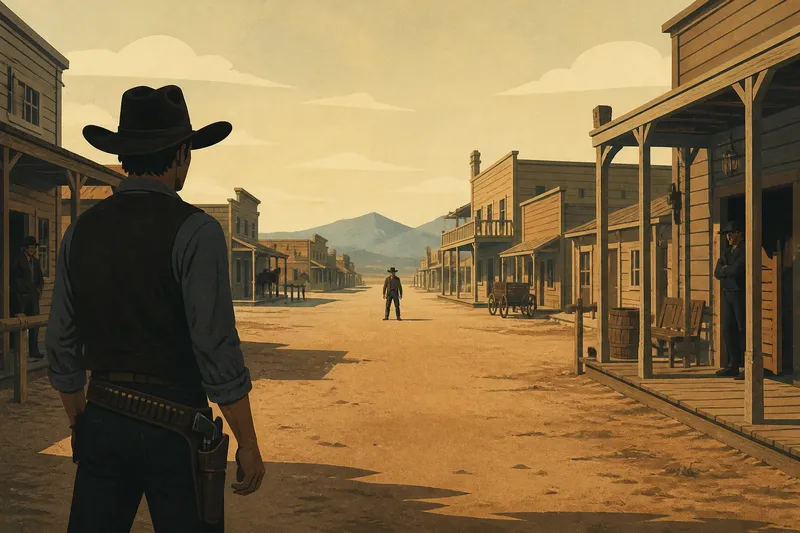
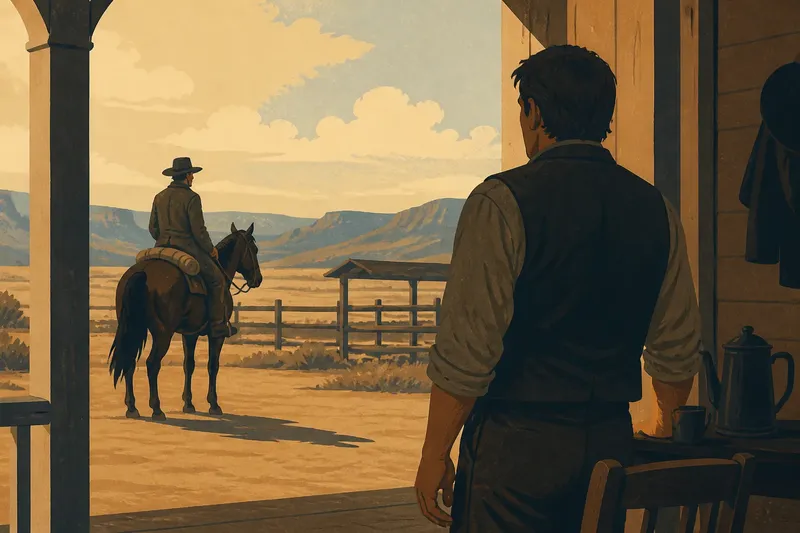
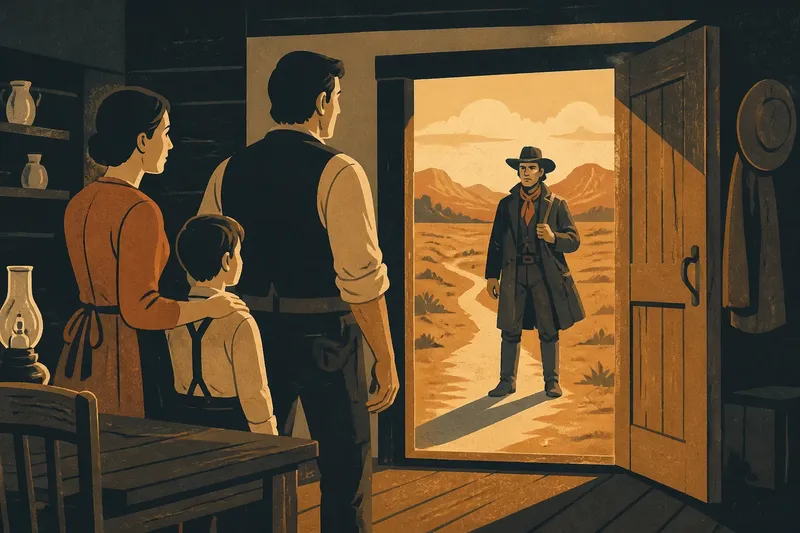
The Myth That Every Western Needs a Showdown
A Western without a final showdown can resolve its central tension through a consequential choice. Learn to make a quieter climax clear, visual, and earned.
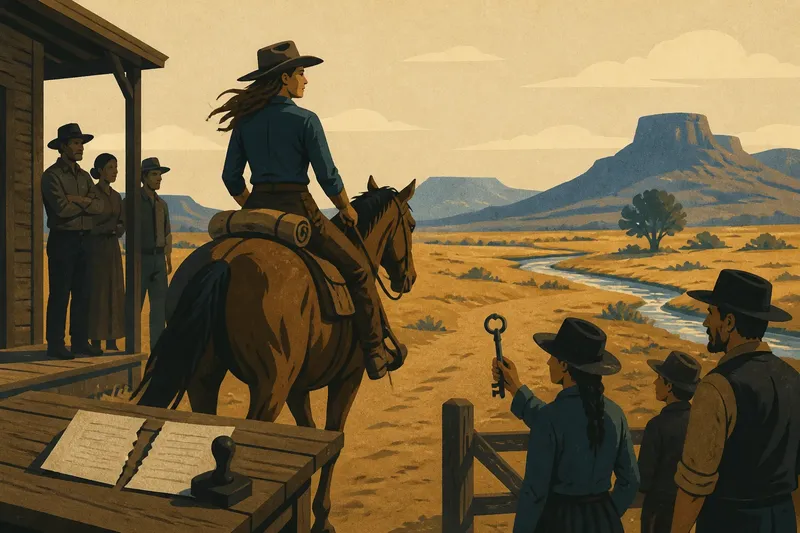
A Western without a final showdown can end with a deed torn in half, a rifle lowered, or a rider turning away. The gunfight is one way to make a conflict visible, but a quieter ending can carry equal dramatic weight when the protagonist’s choice changes what happens next.
Removing the duel can leave a story feeling unfinished if the gunfight had been doing several jobs at once: naming the conflict, forcing a decision, and showing its outcome. A quieter climax must give those jobs another form. Start with the central choice, then connect it to a visible consequence.
What question must the ending answer?
A story can end without a shot, but it cannot stop before its central question has an answer. If viewers have been waiting to learn whether a family will keep its land, whether a deputy will obey a corrupt employer, or whether a scout will guide a posse, the ending needs to show what the protagonist chooses and what that choice changes.
Phrase the conflict as a question that can be answered through action: Will the rancher sign away the spring, or refuse? Will the deputy deliver the prisoner, or open the cell? A broad theme such as justice is not enough. A specific choice gives the final scene a task, even if nobody reaches for a weapon.
Say you are writing an invented Western about a rancher pressured to surrender a creek crossing. In the draft, she leaves town without signing, but nothing shows whether she has given up or made a decision. She tears up the prepared deed, hands the water key to neighbors who depend on the creek, and rides out alone; viewers can see that she rejects the private claim and accepts the cost of acting without protection.
How can a quiet conflict feel substantial?
A gunfight supplies immediate physical danger. Without one, a dispute over a document or duty can look slight unless the story has shown what is at stake. Rather than inflating the danger, make the consequences legible in the characters’ routines.
A water ledger can show who will lose access to a creek; a locked stable can signal that a hired hand has been dismissed; an empty chair at a town meeting can make an absence visible. These details do not replace conflict. They help viewers see its effects before anyone explains them.
Let the ending alter one of those details. A key changes hands, a notice comes down, or a wagon turns away from disputed property. The final action should change what someone can do next, not merely symbolize a decision. Like moving a chair out of a doorway, a modest act can change which paths remain open.
When does restraint become a dramatic choice?
Restraint matters when the character has a reason to act and a real opportunity to do so. A hero who never confronts an opponent may seem passive. A hero who lowers a rifle after the opponent is disarmed has made a choice, but the scene must establish why that choice matters.
Make the option to use force plain. The character might have a clear shot, hold the deed that would let a posse seize a homestead, or be asked to identify a suspect. Then give the character a credible alternative: set down the rifle, return the deed, or tell the group what they do not want to hear. The choice should grow from a value or relationship already present in the story, not from a last-minute speech explaining its theme.
Keep the response proportionate. An opponent may leave, face an ordinary legal process, or remain an unresolved presence; the story need not punish every wrongdoer on screen. The protagonist’s refusal can change the terms of the conflict without repairing every harm.
What can resolve a conflict when nobody wins?
Some Western conflicts do not offer a clean victory. A family may keep its house but lose its livelihood; a deputy may prevent an arrest while remaining accountable for earlier obedience. An imperfect result need not be treated as failure or replaced with a duel just to produce a winner.
Define resolution for this story. It may be a change in who controls a decision, an admission that ends a deception, or a boundary the protagonist will no longer cross. Resolution means the central question has an answer, not that every character is satisfied or every consequence has vanished.
Keep the remaining cost visible. A character might leave with less land, an estranged partner, or no safe route home. That residue gives a quiet settlement texture: the audience can recognize a decisive act while seeing what it could not mend.
How can a quiet ending stay cinematic?
Without a shootout, a finale needs visual and audible choices that hold attention. Focus on a few elements viewers already understand: the object in dispute, the person who must decide, and the person waiting for an answer. A crowded final speech can blur the decision as readily as an unnecessary gunfight.
Use blocking to make the choice visible. A character can step away from a doorway, return a horse to its owner, or place a weapon on a table and leave it there. Sound can mark a change, too: a bell rings for a meeting the protagonist no longer controls, or wind fills the pause after a refused command. These cues have no fixed meanings; their force comes from what the film has already taught viewers to notice.
Choose a final image that shows the new condition instead of announcing a lesson. A gate left open may suggest that an old boundary no longer holds, while an unoccupied saddle can mark a departure. Tie the image to the story’s particular object, place, or obligation so it does not feel borrowed from another Western.
What questions do writers ask about a Western without a final showdown?
Does a Western climax always need a gunfight?
No. It needs a consequential action that answers the central conflict. A refusal, confession, departure, or transfer of responsibility can do that work when the setup makes the stakes clear.
How can a nonviolent climax feel tense?
Give the protagonist a limited opportunity to choose and make the cost of each option understandable. Waiting for a signature, reply, or decision can carry tension when viewers know who will be affected and why the delay matters.
Can the antagonist remain unresolved at the end?
Yes, if the story answers its own central question rather than leaving the protagonist’s decision unclear. An antagonist may escape or remain powerful while the protagonist still chooses what to do, permit, or refuse.
What should the last scene show?
Show the immediate consequence of the choice through an object, action, or changed relationship already established in the story. Avoid adding a new crisis merely to make the ending feel larger.
How can you revise a Western without a final showdown?
When a draft leans on a final duel out of habit, revise the dramatic work before replacing the action. For each item below, check the stated evidence and follow the decision that fits:
- Name the unanswered question. Check whether the conflict can be stated as a choice the protagonist makes. If not, sharpen it into an actionable choice; if it can, keep that question visible in the final scene.
- Locate the cost. Check whether each option carries a consequence established before the finale. If neither has a clear cost, plant one in a routine, relationship, or possession; if both do, let the ending show which cost the protagonist accepts.
- Separate decision from punishment. Check whether the climax asks the protagonist to choose, the antagonist to face a consequence, or both. If one event is carrying both jobs without clarity, separate them; if the distinction is already clear, preserve it.
- Choose a visible action. Check whether viewers can identify what changes after the climax. If not, replace an abstract declaration with a refusal, disclosure, departure, or transfer of control; if they can, avoid adding explanation that repeats the action.
- Leave a specific remainder. Check what the decision does not repair. If the cost has disappeared, show a remaining consequence tied to the story; if it is already visible, do not add a new threat just to launch another climax.
- Test the final image against the story. Check whether it uses an established object, place, or obligation. If it could close any unrelated Western, connect it to this story’s details; if it already does, let the image stand without an explanatory speech.
The familiar duel is easy to read: two opponents meet, and one prevails. A Western without a final showdown asks viewers to understand a decision through its setup and consequences. A refusal can close the story as firmly as a shot when the scene makes clear what the character gives up—and what changes because of that choice.