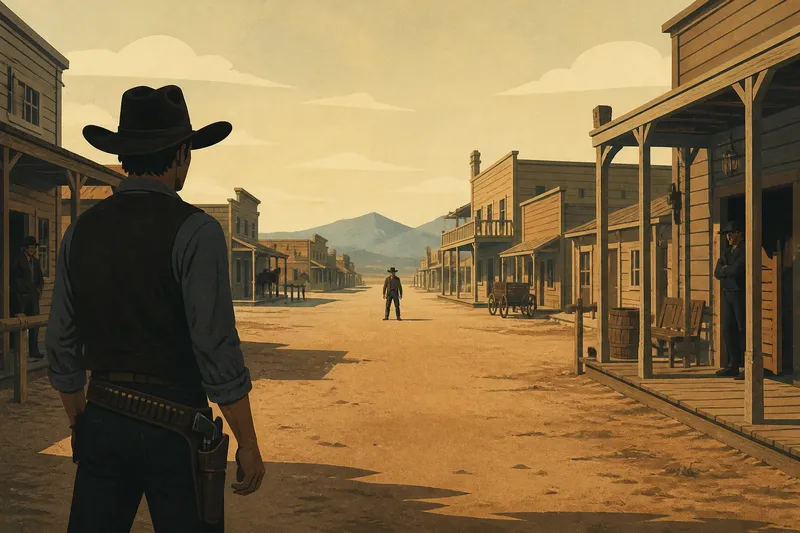
The Lone Rider and the Returning Stranger
The lone rider and returning stranger reveal two Western ideas of belonging. Learn how movement, recognition, and thresholds make each character’s claim to home visible.
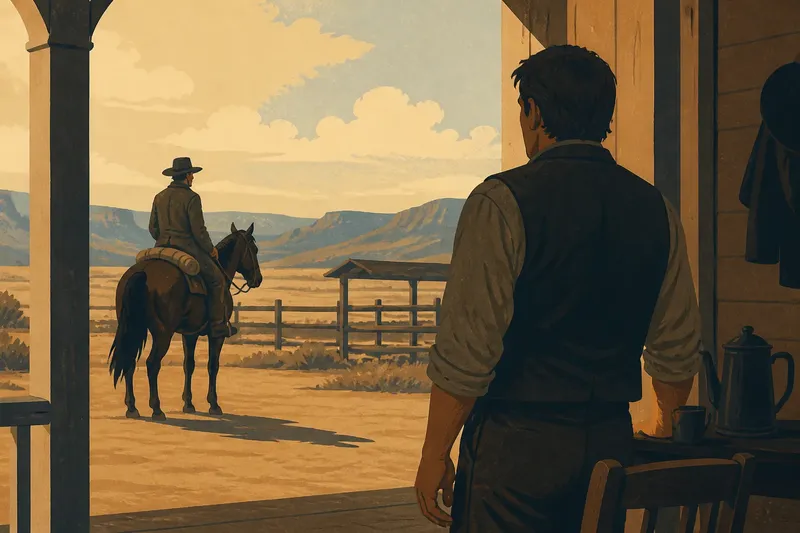
The lone rider and returning stranger give a Western two different ways to picture belonging. One carries distance as a condition of life; the other arrives with a past that makes the place feel changed. Watch where each character stops, who recognizes them, and whether the landscape seems open or already claimed.
What does the lone rider carry?
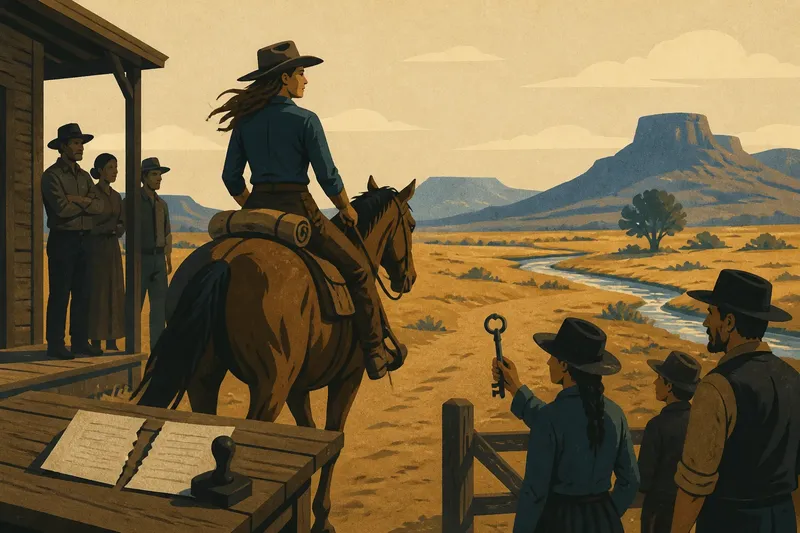
The lone rider’s identity is often legible before anyone knows a name. A horse, a bedroll, a weathered coat, and the habit of keeping to the edge of a group suggest someone organized around departure. The character may pass through a settlement, but the film does not necessarily frame that visit as a step toward joining it.
This mobility is not the same as freedom without cost. A rider who can leave at any moment may also lack a dependable place to return to. Westerns make that tension visible through repeated thresholds: the rider pauses at a doorway, stays near the horse, or chooses a seat that leaves the exit clear.
Notice how often the rider is shown in motion even when the plot has temporarily stopped. A figure crossing a ridge or receding along a track can remain psychologically separate from the people waiting in town. The road functions like a coat that is always close at hand: useful, familiar, and hard to put down.
Why does the returning stranger unsettle a place?
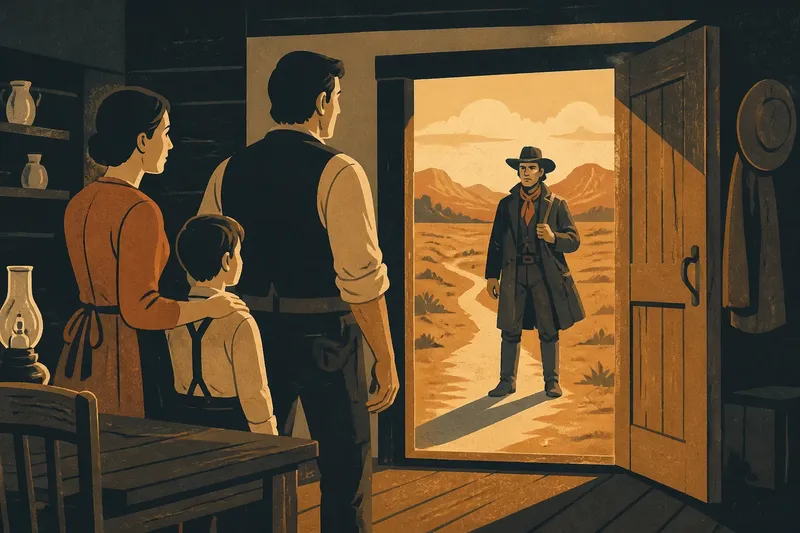
The returning stranger brings movement in the opposite direction. Their arrival turns a familiar location into a question: Is this still home, and does anyone there still recognize the person who left? A porch, a ranch gate, or a street corner may look ordinary to others but carry the weight of an earlier departure.
Recognition can be welcoming, wary, or absent. A former friend may address the stranger by an old name, while a younger resident knows only the reputation left behind. Such moments make belonging social rather than merely geographic. Coming back establishes a claim, but it does not settle whether the community accepts it.
The stranger’s movement also tends to have a direction. Unlike the rider who seems to keep moving because stopping is difficult, the returning figure has a destination, even if the purpose is unclear. The film can hold that purpose back while showing how each familiar landmark tests the character’s memory against the present.
How do their movements make belonging visible?
Compare the characters’ relation to a doorway. The lone rider may linger just outside it, framed between the road and the room. The returning stranger may cross the same threshold, only to find that entering a building is not the same as being welcomed inside its life.
The difference appears in scenes of waiting, too. A rider often waits for a practical reason—a horse to rest, a storm to pass, a piece of information—then leaves when the need is met. A returning outsider may wait for an answer from another person: permission, forgiveness, recognition, or simply a sign that the old connection still exists.
Imagine a rider stopping at a ranch where a returned former resident is already staying. The rider keeps a saddle near the door and asks only for directions; the returning stranger knows the kitchen’s old arrangement but hesitates before taking a seat. That contrast would let viewers read two relationships to place through ordinary choices, without a speech explaining either character.
These patterns are tendencies, not fixed rules. A lone rider can be drawn into a community, and a returning stranger can decide that home no longer fits. The useful question is not only who travels farther, but what each character expects to happen after arriving.
What should you watch for in a scene?
- Who initiates recognition? If townspeople name the rider, the film may be turning a passing figure into a known presence; if the returning stranger has to explain who they are, the place may have moved on without them.
- Where is the horse? If it is tied close to the entrance, the character may be ready to leave; if someone stables or takes it away, the character may be staying long enough to become part of the setting.
- Who knows the route? If the returning outsider remembers a shortcut or boundary, the character has a specific history with the place; if the lone rider knows only how to get through, movement may matter more than reclaiming a home.
- What changes after the character arrives? If a conversation resumes, a household rearranges itself, or a local dispute gains personal history, the return has altered the community; if the town remains much the same after the rider leaves, the visit may have been a brief interruption.
- Who controls the threshold? If the rider remains outside while someone else decides whether to open the door, the scene emphasizes distance and permission; if the returning stranger enters but is ignored, physical access has not restored social belonging.
- What does the character do when invited to stay? If the rider accepts a place at the table, the film may be testing a move toward attachment; if the stranger declines because the household has changed, the character may be choosing a new path rather than insisting on an old claim.
Which questions clarify the difference?
Can a lone rider belong anywhere?
Yes, but belonging may appear as a temporary bond rather than permanent residence. A rider can be trusted by particular people or attached to a cause while still resisting the routines and obligations of a settled home.
Does returning make a stranger an outsider?
Not automatically. The tension comes from the gap between remembered membership and present recognition, which the film can show through changed relationships, new occupants, or a community that no longer shares the character’s assumptions.
Why does the returning stranger often know the town’s past?
That knowledge gives the character a personal stake in places that other characters may treat as settled facts. It also lets the story reveal that a familiar community has a history people interpret differently.
Can one character combine both types?
Certainly. Imagine a rider arriving at a former home with a bedroll, a remembered route, and no invitation from its current residents. The character asks after an old friend, learns that the household has changed, and leaves without entering; the result is a returning stranger whose destination has not become a place of belonging.
What does each type ask of the viewer?
The lone rider invites attention to the cost of remaining unattached: what relationships become possible, and what must be surrendered to keep moving? The returning stranger asks a more local question: who has the right to call a place home when memory and present life no longer match?
Those questions help distinguish the characters even when both appear on horseback or arrive from beyond the frame. In a Western, the lone rider and returning stranger are not simply two travelers. One makes belonging seem like something that movement postpones; the other makes it something that movement puts on trial.
When a scene leaves you unsure which figure you are watching, track what happens after the arrival. The rider’s story may turn on whether a stop becomes a stay; the stranger’s may turn on whether the place recognizes the person who came back.